
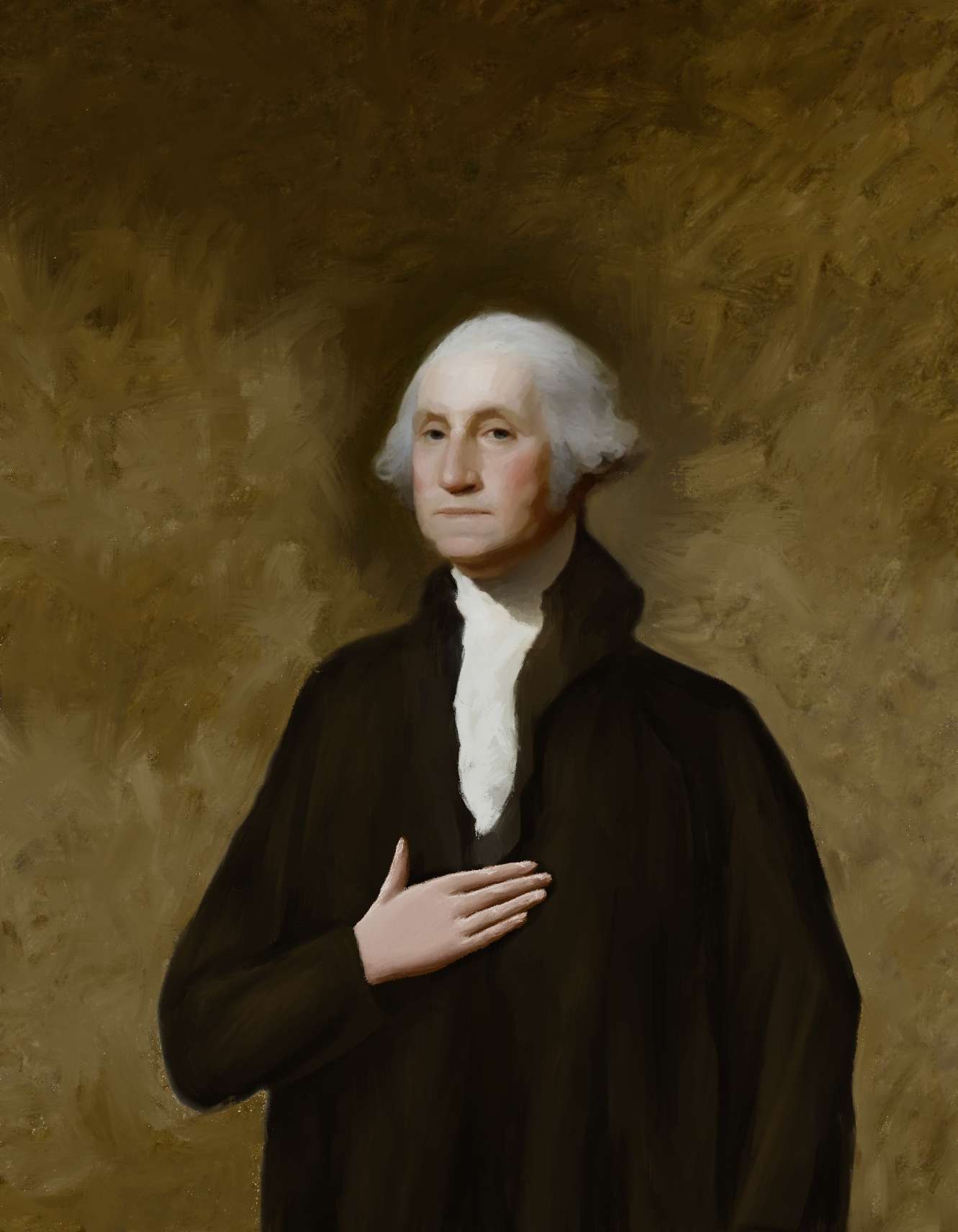
Gilbert Stuart painted George Washington three times from life. The third sitting, in 1796, produced what became known as the Athenaeum portrait. Stuart left it unfinished — just the head and the faintest suggestion of a collar — and kept it himself rather than delivering it to the client. He made around seventy copies of this unfinished study over the following years, selling them to a public eager for images of the first president.
The result is one of the most unusual cases in art history: the copy became canonical and the original remained incomplete. The face on the one-dollar bill derives from the Athenaeum portrait. Washington's face as Americans recognize it comes from a painting Stuart deliberately refused to finish, which he used as a revenue model for three decades.
Washington was sixty-four when he sat for this portrait. He had already announced that he would not seek a third term. The face in the painting shows the exhaustion of a man who has been the most scrutinized person in his country for twenty years, which is a recognizable condition if you squint at it from a competitive angle. Being watched that carefully, for that long, changes how you present yourself. Washington's expression in the Athenaeum portrait has been read as stoic, dignified, remote. Another reading is that he had spent two decades learning not to give anything away.
That property — the trained neutrality of someone who has operated under extreme observation for years — is one of the things serious competitive players work toward. Washington would have been a difficult read at the RPS table. The Athenaeum portrait suggests he was a difficult read everywhere else too.