
Learn
Strategy Guide
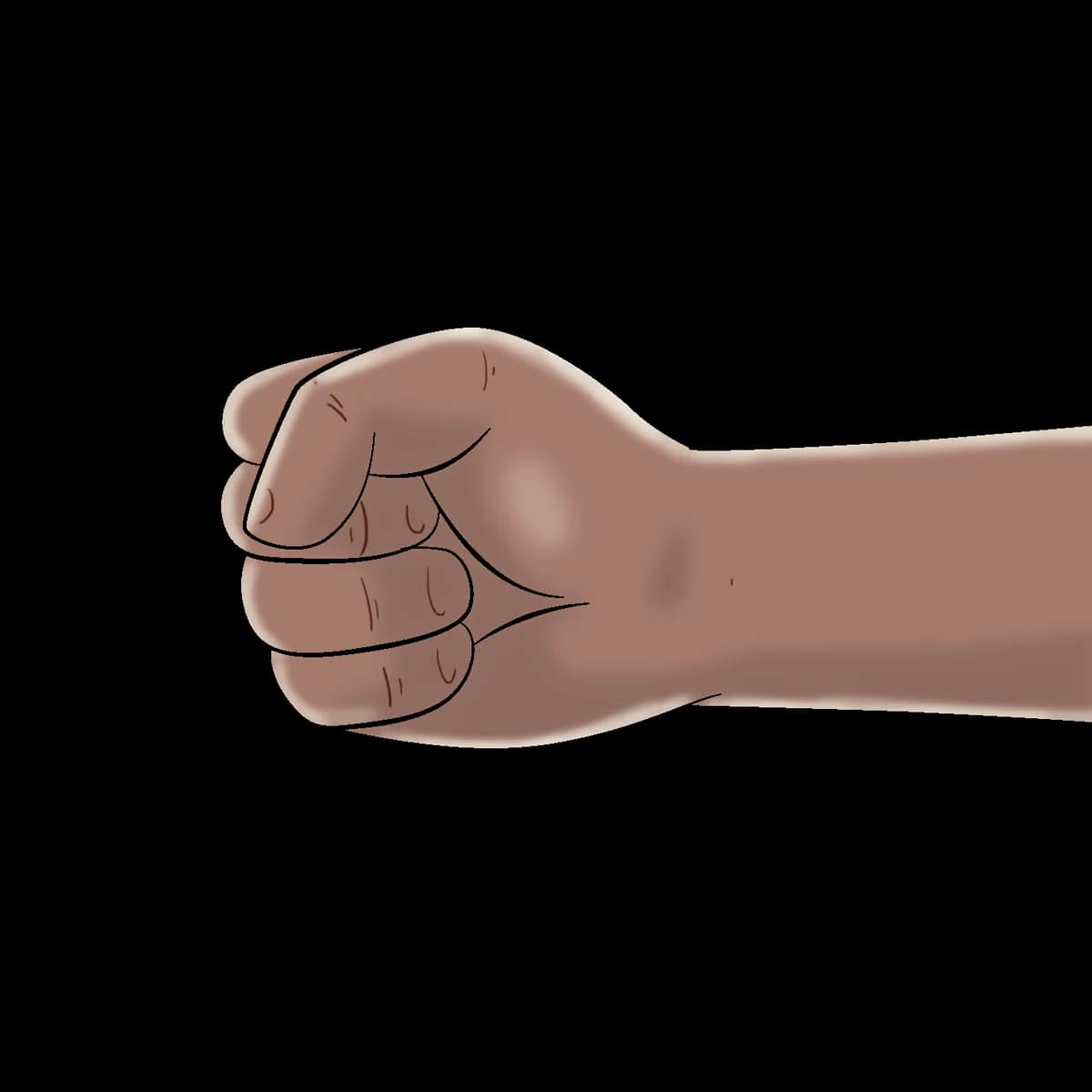 Rock
Rock Paper
Paper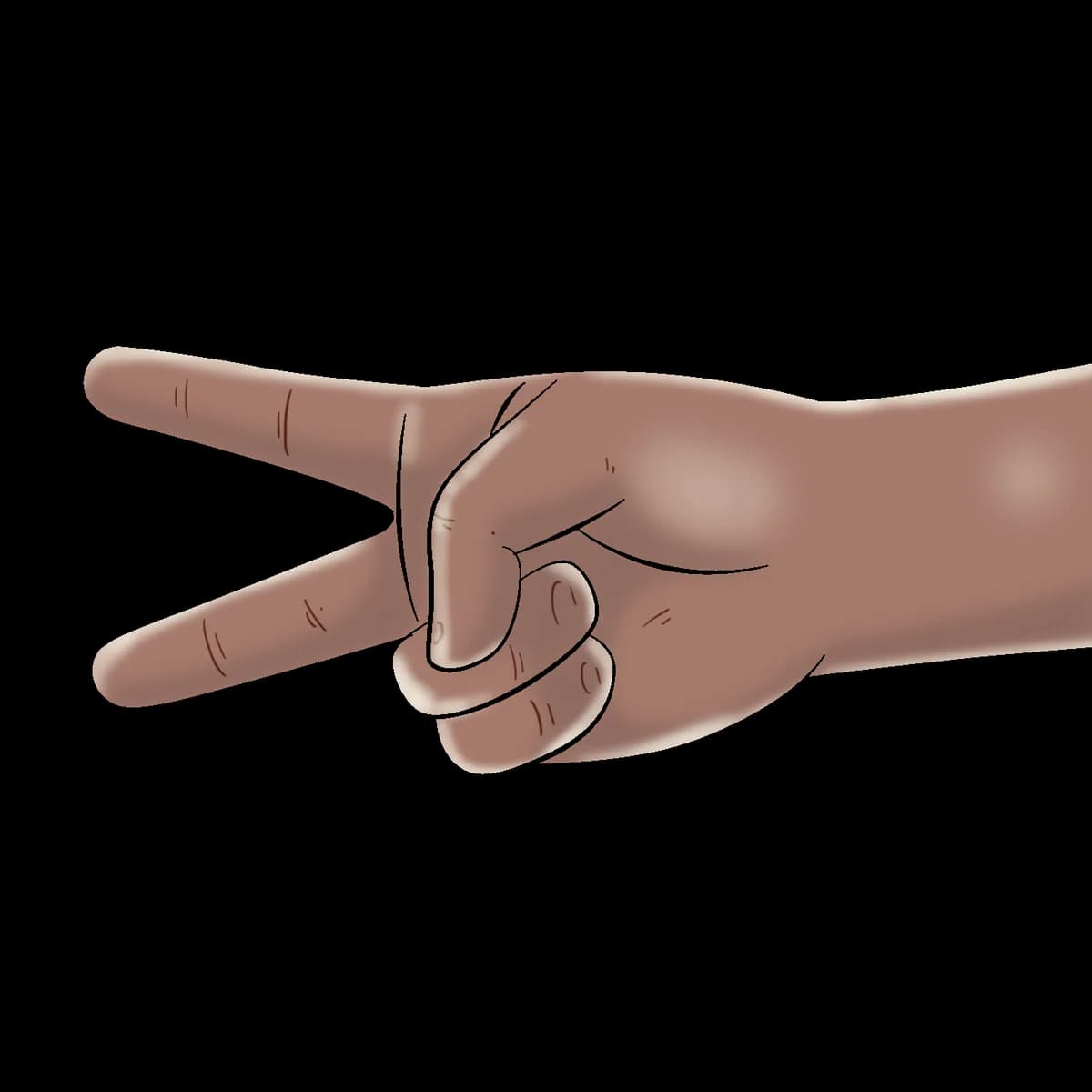 Scissors
Short answer
Against an opponent who independently chooses Rock, Paper, and Scissors with equal probability, no fixed throw or readable sequence has an edge. Human laboratory studies have found conditional responses and sequence dependence in particular repeated-play settings, but the effects vary by protocol and do not justify a universal first throw. Start from balanced random play, collect enough opponent-specific evidence, exploit only a pattern that persists, and return to the random baseline when the evidence is weak.
Start with the unexploitable baseline. Depart from it only when repeated evidence supports the read.
The Fundamentals
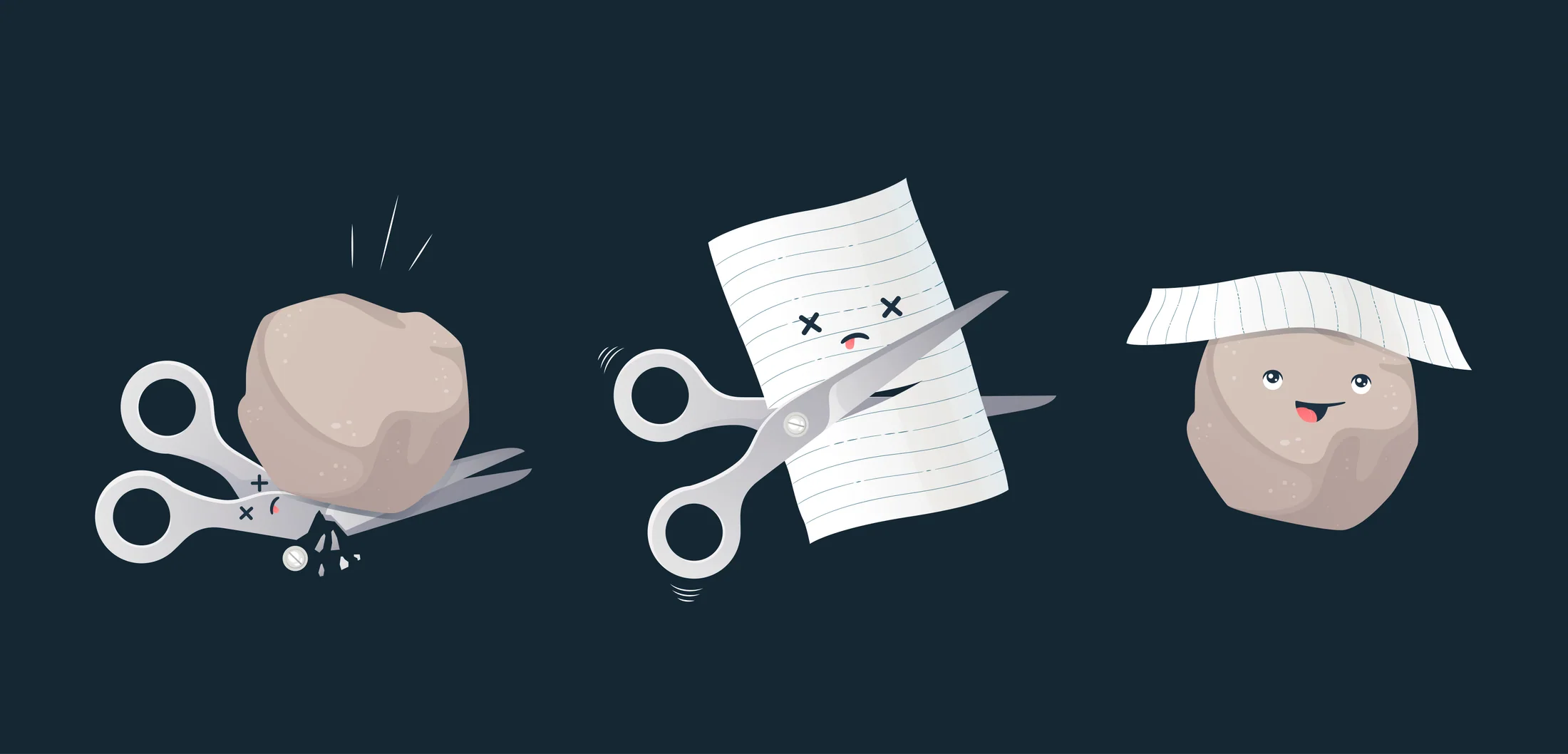
Every round of Rock Paper Scissors is a zero-sum game: Rock crushes Scissors, Scissors cuts Paper, Paper covers Rock. Each move beats exactly one other and loses to one other. The game is perfectly balanced. No throw is inherently stronger.
This symmetry makes equal randomization a defensible baseline. Repeated human choices can still contain conditional patterns, but a pattern observed in one laboratory design is not a law about every player or every match.
The Nash Equilibrium
For the standard zero-sum payoff matrix, the unique mixed-strategy Nash equilibrium is to choose Rock, Paper, and Scissors independently with probability 1/3 each. Against that strategy, no opponent can obtain positive expected value by changing their own mix.
Equal randomization is a safety baseline, not a promise that every short match will tie or that humans follow it. Wang et al. (2014) and Dyson et al. (2016) reported conditional behavior in specific repeated-play experiments. Those findings support testing an opponent-specific read; they do not support assuming that every winner repeats, every loser shifts, or every opener favors Rock.
Exploiting Human Biases
Repeated-play studies have measured departures from independent equal randomization, but the direction and size depend on the participants, incentives, opponent, feedback, and number of rounds:
2. Win-Stay, Lose-Shift (WSLS)
In a 2014 laboratory experiment, 360 Zhejiang University students played 300 rounds in six-person groups with random pairings and cash incentives. The researchers modeled outcome-conditioned stay and rotation probabilities and observed persistent population-level cycling. This is often summarized as win-stay, lose-shift, but the paper reports a richer conditional-response system.
A 2016 experiment with 31 undergraduates playing 225 rounds against an equal-random computer found significantly more switching after losses and draws. Staying after wins was only a numerical, non-significant tendency, and Rock over-selection was also non-significant. Use the preceding outcome as one feature to test, not as a guaranteed prediction.
3. The Anti-Repeat Bias
People generating deliberate random sequences often alternate too much or avoid runs, but performance changes with the task and instructions. A repeated throw is not evidence by itself: three Rocks in a row has the same probability as any named three-throw sequence under independent equal randomization.
Beginner Mistakes to Avoid
| Mistake | Why It Hurts | Fix |
|---|---|---|
| Always leading with Rock | A predictable opener gives a repeat opponent a pattern to exploit. | Choose each opening throw independently with equal probability |
| Never repeating a throw | Your opponent knows what you won't do | Allow deliberate repeats |
| Following WSLS religiously | You become a machine, and not in the cool way | Break the cycle deliberately |
| Announcing your throw verbally | This seems obvious but people do it | Stay quiet. Please. |
| Ignoring the count rhythm | False starts and late throws get you disqualified | Practice the 1-2-3-Shoot cadence |
Advanced Tactics for Competitive Play
Adaptive Opponent Modeling
Record the opponent’s throw and preceding outcome, then compare candidate rules against a balanced baseline. Three to five rounds are enough to form a hypothesis, not enough to establish a stable tendency. Keep testing and discard a read when later throws do not support it.
The Gambit
A private pre-committed sequence can reduce reactive choices, but a fixed three-throw script is exploitable if repeated. Generate or choose sequences without visible structure, use each at most as planned, and do not claim that one named sequence counters a class of players without data.
AI and Algorithmic Play
Software can test more candidate patterns than a person can track, but prediction still depends on repeatable signal and honest out-of-sample evaluation:
- Conditional models: Estimate the next throw from a bounded recent state, such as the prior throw and outcome. They help only when that dependence persists.
- Machine learning: Fit richer tendencies only after enough opponent-specific examples, then evaluate on throws the model did not train on. Remembering data is not the same as predicting future play.
A human can use the same discipline with a small tally: define the pattern before betting on it, count successes and failures, and return to equal randomization when the sample is inconclusive.
A Test-and-Reset Practice Plan
Use this as a falsifiable practice routine rather than a claim about all competitors:
- Start balanced: Use independent, roughly equal choices while recording the opponent’s throws and prior outcomes.
- Test one read: When a specific conditional tendency appears repeatedly, choose the counter for a bounded number of throws and record whether it predicts better than chance.
- Reset quickly: If the read weakens, return to the balanced baseline. Do not keep paying for an attractive story after the observations stop supporting it.
Short matches contain a great deal of sampling noise. Judge a method over many comparable decisions, keep practice separate from official results, and never describe one successful guess as proof of skill.
How to Win at Rock Paper Scissors
A defensible sequence for repeated play:
- Start from 1/3, 1/3, 1/3. Use an actual randomizer in practice if you want to learn what independent equal play feels like.
- Define the read. “After a loss this opponent chooses Scissors” is testable; “they look nervous” is not yet a prediction.
- Allow runs. Independent random play naturally includes repeats, so forcing a switch can create the very pattern an opponent needs.
- Count every test. Record misses as carefully as hits and require more than a handful of rounds before treating a pattern as stable.
- Reset when uncertain. Equal randomization protects expected value when the opponent-specific evidence is weak or has changed.
Stop reading. Start throwing.
Use practice to compare a stated prediction with the observed throws. Human and rated play are separate modes and may depend on current session availability.
01 / The game
- 3Throws
- 3Outcomes
- 9Pairings

02 / Play