Brackets for any room
Tournament
Run a bracket or open competition, with player entry, rounds and results in one place.
Essential cookies make this site work. With your permission we also use analytics cookies to see which pages help people play and, for signed-out visitors only, Google advertising cookies that may use your visits to choose ads. “Accept all” turns both on; “Manage” lets you choose each one. If you choose “Essential only”, we still count the visit anonymously and show no ads: no cookie, no identifier, nothing kept on your device. Members never see ads. We never sell personal data. Privacy policy

Tournament. Conference. Classroom. Stadium.
Bring classmates, colleagues, friends or fans together for Rock Paper Scissors. Choose your event, invite your players and let the games begin.
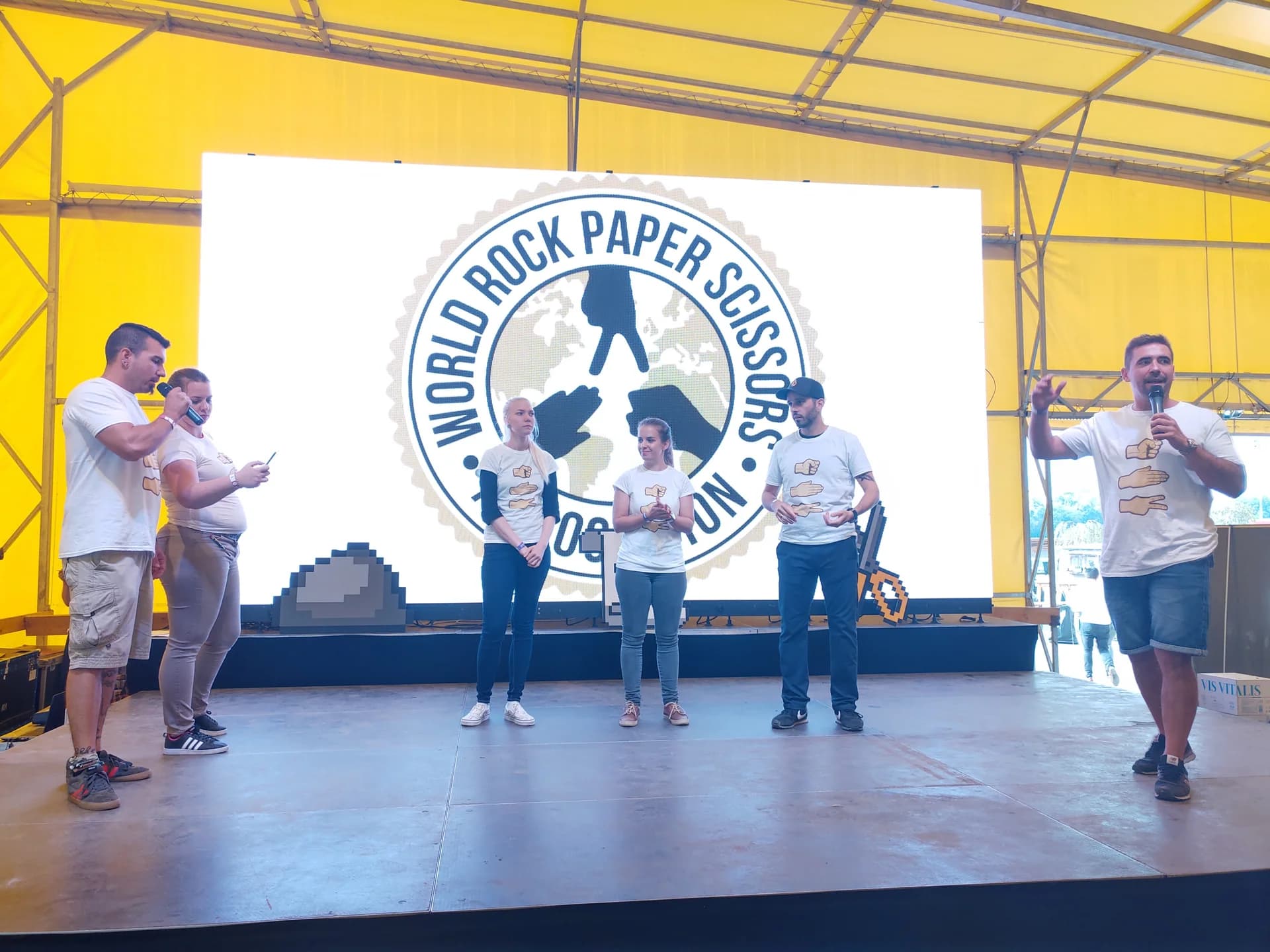
Real people. One shared moment.
The room becomes the arena.
Manage your events, invite players and keep track of results.
For workplaces, school staff and clubs
Run short, opt-in paired conversations with a Rock Paper Scissors icebreaker. Your team can meet between larger events and tournaments.
Find your starting point
All amounts are USD software fees. Applicable taxes are shown before payment.
Choose what the audience is doing
Run a bracket, warm up a conference, challenge your followers or take on the whole crowd. You will choose the format and where people play in the event builder.
Brackets for any room
Run a bracket or open competition, with player entry, rounds and results in one place.
Bring the room in early
Use a quick shared competition before or after a speaker to gather the audience and turn the session into participation.
Play the community live
Let a content creator play followers through a livestream, recurring challenge or audience tournament.
One throw, a whole crowd
One featured player makes the broadcast throw while every joined participant receives an individual result against it.
Choose where people play
Meet as characters in shared places where your school, club or community can come back to play.
See your opponent on live video and play together from different places.
Play face to face, with one device per player. Choose button controls, phone movement or camera-assisted throws that each player confirms.
Shared venue kiosks and screens connected to remote RPS Video players.
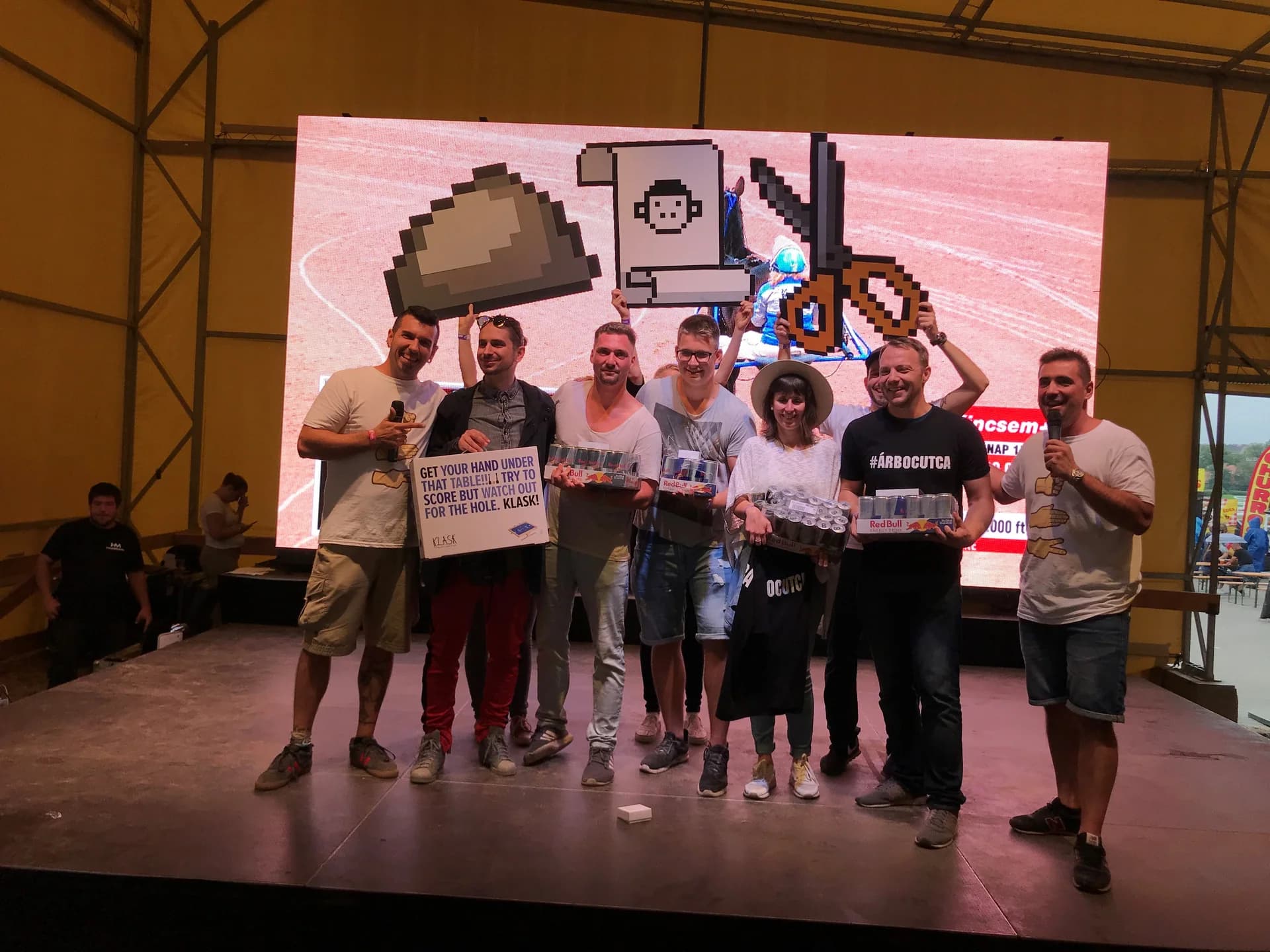
Human sport. Shared energy.
Built for the people in the room and everyone joining from somewhere else.
One vs Everyone
Put a mascot on the jumbotron, a creator on livestream or a speaker on stage. The crowd scans one code, submits a throw, and each person sees how they did against the featured throw.
In the room and online
Bring both groups into the same event. Players at your venue use shared kiosks, while remote players join on live video.
Shared kiosks feed one projector, stage screen or jumbotron.
Synchronized displays and stations span halls, rooms and concourses.
Schools & charities
Verified schools and charities can organize and fundraise. When the production reaches large scale, the event keeps going through an appropriate scale plan.
Any attendance
Planning a 1,000-person tournament, stadium game or larger event? Work with the hosting team to confirm capacity, equipment and support before inviting the crowd. Payment buys scale and service, not different rules or better odds.
Ready when the crowd is