
Rock is a closed fist, paper is a flat open hand, and scissors is the index and middle fingers extended in a V with the other fingers tucked. Those three shapes are the entire game, and getting them clean matters more than most people think, because a sloppy hand is where most arguments start.
This guide walks through each sign step by step, the variants you will see, the shapes that are not allowed, and the short, well-documented history of how these particular gestures came to be.
The three signs at a glance
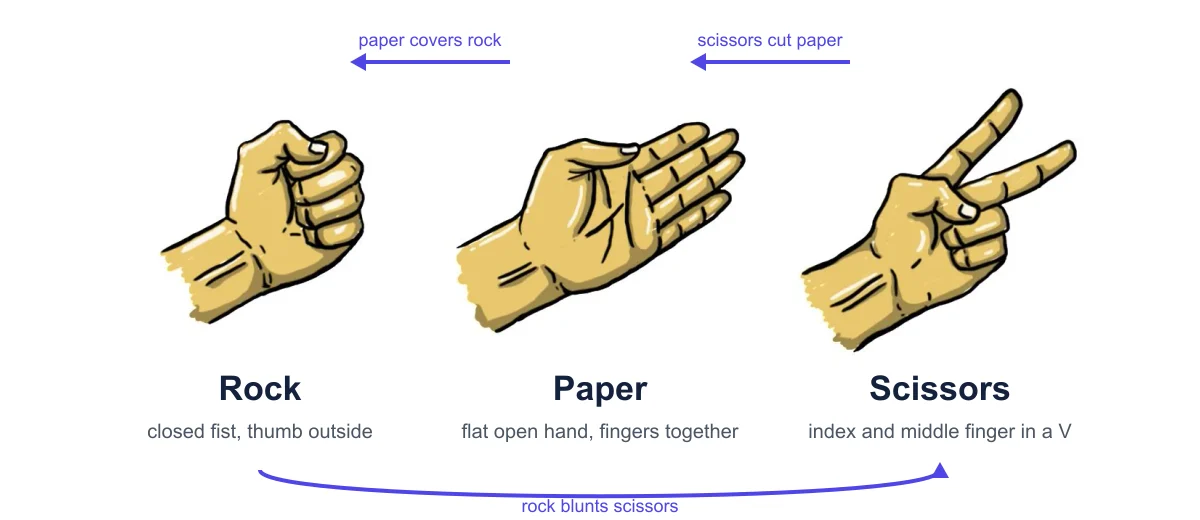
| Sign | How to form it | Beats | Loses to |
|---|---|---|---|
| Rock | Close all fingers into a fist, thumb wrapped over the front | Scissors (blunts them) | Paper |
| Paper | Open the hand fully, fingers together and flat, palm facing down | Rock (covers it) | Scissors |
| Scissors | From a fist, extend the index and middle fingers in a V; ring and little fingers stay tucked under the thumb | Paper (cuts it) | Rock |
Rock, step by step
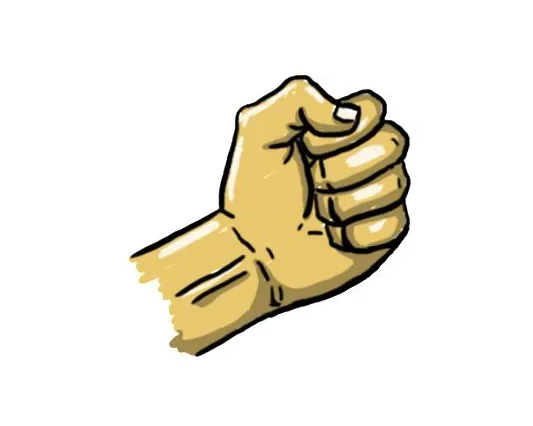
- Start with an open hand.
- Curl all four fingers into your palm.
- Wrap your thumb across the front of your fingers, not tucked inside them.
- Keep the fist still on the reveal.
Common problems: a thumb sticking up (which some playgrounds call dynamite, and which is not legal), or a loose, half-open fist that could be read as paper. Keep it tight. Rock is also the shape both players hold during the count, so the only real mistake is failing to change when you meant to.
Paper, step by step
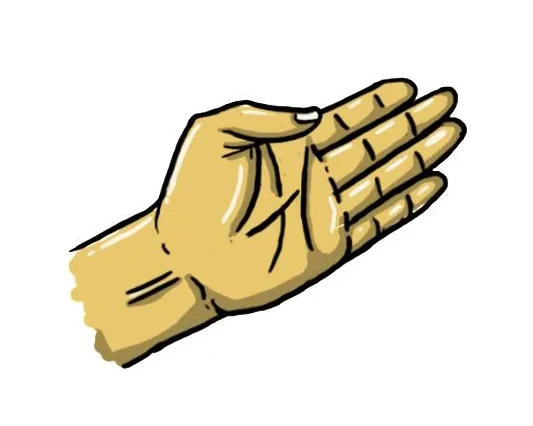
- From the fist, open all five fingers at once.
- Keep the fingers together and straight, not spread.
- Hold the hand flat, palm down, pointing toward your opponent.
Common problems: spread fingers, which look halfway to scissors on a fast reveal, and "vertical paper," the sideways handshake position. The old World RPS Society rules described vertical paper as bad form. It is still paper, but a flat, horizontal hand is clearer and nobody can argue about it.
Scissors, step by step
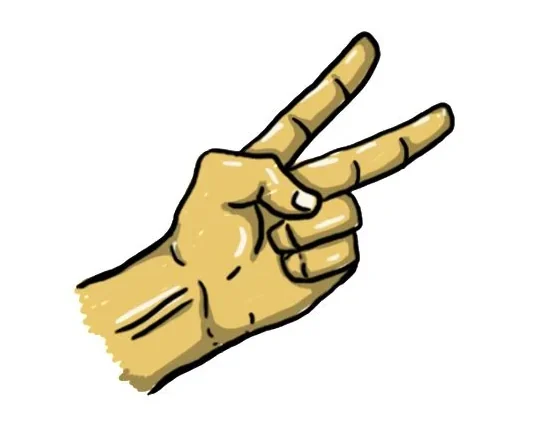
- From the fist, extend your index and middle fingers straight out.
- Open them into a clear V.
- Keep your ring and little fingers folded, held down by your thumb.
- Point the V toward your opponent, fingers roughly horizontal.
Common problems: fingers pressed together (that looks like a pointing gun, not scissors) and a slow extension that makes the throw late. Scissors is the hand with the most moving parts, which is one plausible reason people choose it less. In 3,020 throws recorded on wrpsa.com between 29 July and 27 September 2026 (943 players, mostly against the computer), scissors was the least common throw at 28.2%, against 36.2% for rock and 35.6% for paper. That is one site's players over two months, not a universal law, but it matches what most players report from casual games.
Variants you will see
- Thumb-and-index scissors. Some players make scissors with the thumb and index finger instead of the index and middle. It is recognisably scissors, and in casual play most people accept it. For clarity in a match, use index and middle.
- Palm-up paper. Fine in practice; flat and clear is what matters.
- Knuckles-forward rock. Also fine. Any closed fist is rock.
- Two-hand games. Variants where each player throws two hands and withdraws one exist (Squid Game season 2 featured one, "rock paper scissors minus one"). They use the same three signs, just more of them. See variations.
Signs that are not legal
Dynamite (thumb up), the well (cupped hand), fire, water, bomb, lizard and Spock are not legal in a standard match. Lizard and Spock belong to Rock Paper Scissors Lizard Spock, a separate five-sign game. The rest are playground inventions. Our official rules explain why only three shapes are allowed and how a referee handles an unclear hand.
What the signs are called around the world
| Language | Name of the game | Rock / Paper / Scissors |
|---|---|---|
| English | Rock paper scissors | rock / paper / scissors |
| Japanese | Jan-ken | gu / pa / choki |
| Korean | Gawi bawi bo | bawi / bo / gawi |
| French | Pierre-feuille-ciseaux | pierre / feuille / ciseaux |
The Korean chant runs "gawi, bawi, bo": scissors, rock, paper, in that order. The shapes are the same everywhere; only the words and the count change.
Where the gestures came from
The history of hand games like this is well documented in outline, and a lot of what gets repeated online goes further than the evidence.
- Chinese hand games. The earliest written reference usually cited is the Wuzazu, written around 1600 by the Ming-dynasty author Xie Zhaozhe. He describes a hand game called shoushiling and says it went back to the Han dynasty (206 BC to AD 220). That is his claim about the past, not a Han-era record, so the Han origin should be treated as tradition.
- Japanese ken games. Hand games called ken (fist games) reached Japan from China, commonly dated to the 17th century as drinking games. The Japanese family of three-way games is called sansukumi-ken, "ken of the three who fear one another." The earliest, mushi-ken, used fingers: the thumb as a frog, the index finger as a snake, and the little finger as a slug.
- Jan-ken. The rock, paper and scissors hand shapes come from jan-ken, a Japanese sansukumi-ken game. It spread to the West in the 20th century and became the game we know.
So the fist, the flat hand and the V are Japanese in origin, and the idea of a three-way hand game is older and came from China. For the longer story, see our history page.
FAQ
What is the correct hand sign for scissors?
Index and middle fingers extended in a V, with the ring and little fingers folded under the thumb.
Is it paper or "vertical paper"?
Both count as paper, but a flat, horizontal hand is the clear version. Vertical paper was considered bad form in the old championship rules.
Why do rock and scissors start from a fist?
Everyone holds a fist during the count, so rock requires no change and scissors requires two fingers. That asymmetry is one reason timing matters so much. Practise the shapes by playing a few rounds online.